Concepts
Snap is built around a few core objects that hand work to each other. Understanding how they connect makes every other page make sense — from a single inquiry to a delivered gallery with money in the bank.
Basic concepts
Leads
A lead is an inquiry before it's a job. Leads arrive on their own from your contact form, booking page, and embedded widgets — and you can add them by hand. They wait in the Leads pipeline with a status: new, replied, converted, or archived, while the conversation opens in your inbox. You reply there (with your saved email snippets), and when the answer is yes, one click converts the lead into a project.
Bookings
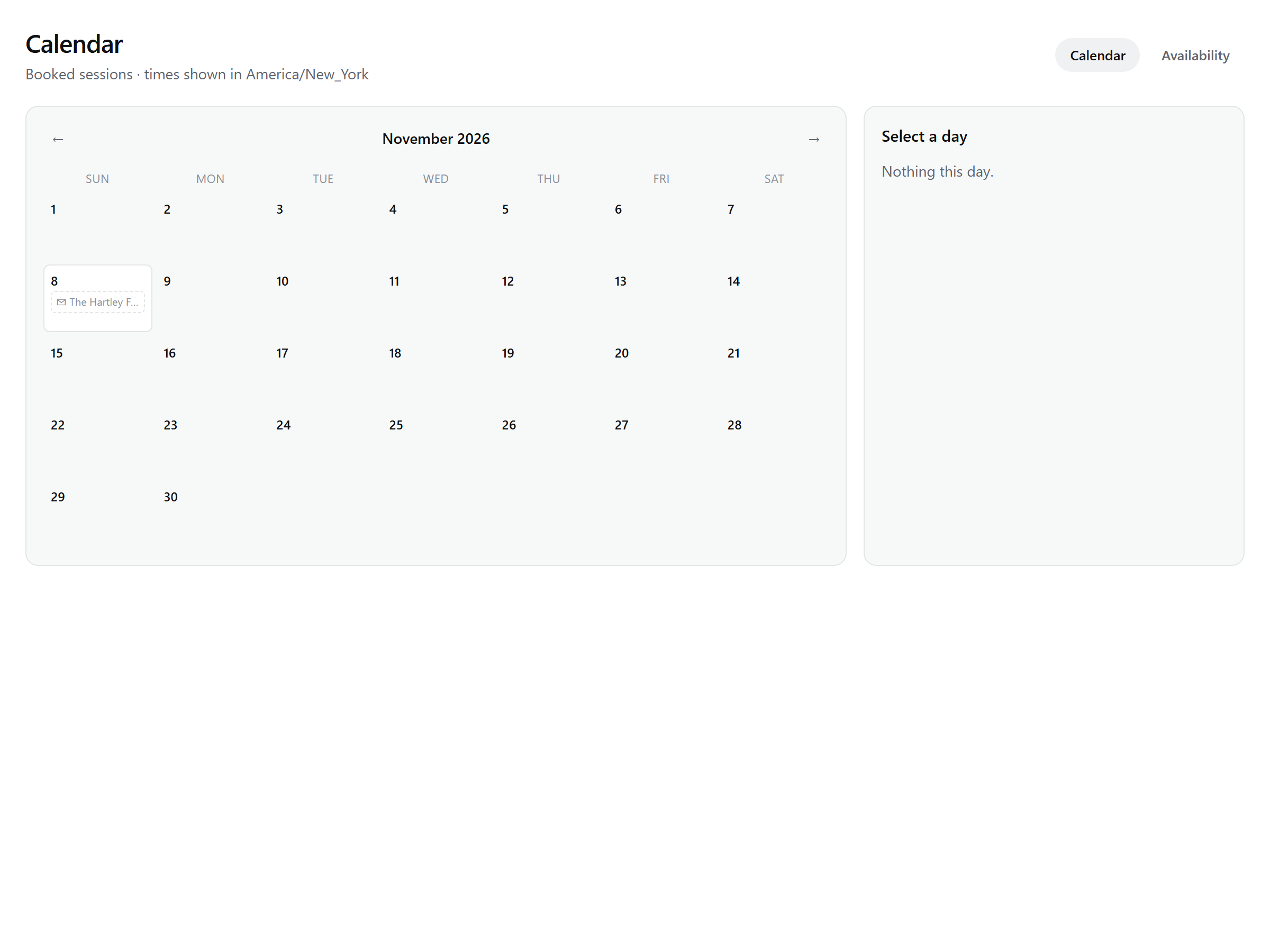
A booking is a confirmed time slot: a session type, an event date, and usually a deposit. Clients book themselves through your booking page or an embedded calendar, choosing from the session types and availability you defined. A confirmed booking creates the client record and the project automatically — and if it came from a lead, that lead is marked converted without you touching anything.
Projects
The project is the job itself — everything about one client's work lives on it. The pipeline is a kanban board with six statuses: Booked, Snapping, Evaluation, Complete, Closed, and Canceled. Move a project freely between them (nothing is terminal, mistakes undo); the only automation is the nightly roll that moves booked projects to Snapping once their event date arrives.
The project hub
Open any project and it's all there in tabs: Overview (form responses and questionnaires), Files (the images, with folders and deduplication), Client gallery (design and send the gallery), Payments & invoices, Contracts, and Activity (the full audit trail). See The project hub.
Galleries
A gallery is a share link you send to the client — designed covers and layouts, slideshows with your music, favorites and selections, downloads under your control. Every gallery is email-verified, expiring, and revocable; you see who viewed and what they loved. Galleries have five concurrently-active slots on Free, fifteen on Lite, and are unlimited on Studio and above. Start at Delivering galleries.
Clients
A client is a person across all their work with your studio, keyed by email — convert two leads from the same address and they land on one client record. Clients see their side through a verified link too: the client portal and installable app gather every gallery you've sent, where each project stands, and their upcoming bookings.
Money
Invoices and payments hang off the project: take deposits and balances, send invoices your client pays online, and watch every transaction — refunds, disputes, payouts — in one ledger. Money is processed by Stripe and lands in your bank via Payouts; Snap never holds it.
Templates
The reusable definitions — contract agreements, forms and questionnaires, email snippets, invoice presets Lite, gallery styles Lite, and session types — live in one template library. Applying a template copies it, so editing a template never rewrites what you already sent.
Plans and what they gate
Snap has three tiers: Free, Lite ($15/mo), and Studio ($29/mo), plus custom plans for teams. The shape of the ladder: Free is the full workflow with capped capacity (20 GB, 5 active galleries, 1 of each template); Lite adds RAW storage and headroom; Studio adds white-labeling, your own domain option, and unlimited templates. Teams, extra domains and 1 TB+ storage are set up as a custom plan - talk to us. Everything tier-gated in the docs carries a badge naming the minimum plan, and Plans & tiers has the exact table.
Note: Reading the docs is never gated — badges describe the feature, not the documentation.
How they fit together
One journey, end to end: an inquiry lands as a lead; your reply (or your booking page) turns it into a booking; the booking creates the project and the client; the project collects files, a contract, an invoice, and finally the gallery you send; the client's payment becomes a transaction and a payout. When the same person books again, their new project joins the same client — the relationship compounds.